Kickoff to Chaos: Inside the Expanded 48-Team 2026 FIFA World Cup
The 2026 FIFA World Cup Expanded 48-Team Era
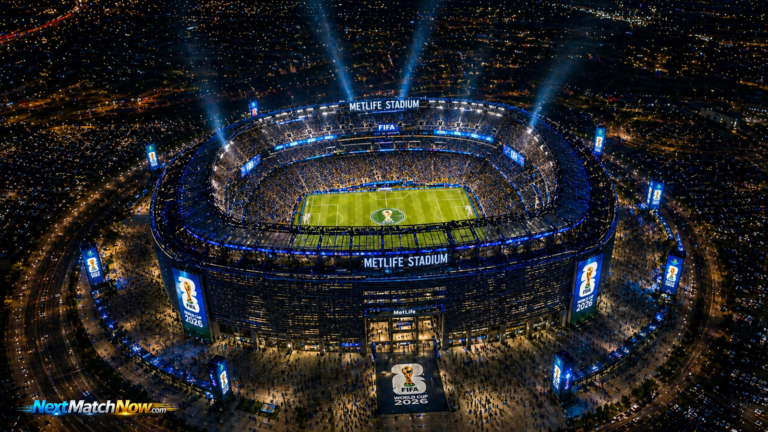
The countdown has officially entered its final, frenetic stage. In less than a month, the sporting world will shift its gaze to North America as the United States, Mexico, and Canada co-host the 2026 FIFA World Cup. Set to kick off on June 11, this iteration of the global tournament is not just another chapter in football history; it is a massive, unprecedented rewrite of the rulebook.
From an expanded field of forty-eight national teams to high-tech scheduling solutions, the 2026 World Cup promises to be the largest and most ambitious sporting event ever staged. As stadiums rush to lay down natural grass and national team managers finalize their twenty-six-man squads, logistical hurdles and severe climate concerns are dominating the conversation just weeks before the first whistle.
The Era of the Super-Sized Tournament
For decades, the World Cup was defined by its thirty-two-team structure, a tightly contested format that left little room for error. FIFA, the sport’s global governing body, has upended that tradition for 2026. This summer, forty-eight nations will compete across a staggering 104 matches, spread over thirty-nine days of near-constant action.
How the New Knockout Format Works
The mechanics of this expansion have been a subject of intense discussion. The teams have been drawn into twelve groups of four. In the group stage, every nation will play three matches against their immediate rivals. The top two teams from each group will automatically secure a place in the knockout rounds, but they will be joined by the eight best third-place finishers.
This creates an entirely new tier of the tournament: the Round of 32. For fans, it means an absolute feast of football, with multiple matches broadcast daily. For the players, it represents a grueling marathon. To alleviate some of the physical toll and ensure star players remain available for the climax of the tournament, FIFA has mandated that players’ yellow card tallies will reset at the end of the group stage, preventing suspensions for accumulation heading into the expanded knockout phase.
A Continental Road Trip
The sheer geography of the 2026 World Cup is difficult to comprehend. Matches will be played across sixteen host cities spanning three massive nations: eleven in the United States, three in Mexico, and two in Canada. It is the first time three countries have jointly hosted the event, requiring an unprecedented level of cross-border coordination.
Preparing the Stadiums for Global Standards
The tournament will begin in a true temple of the sport. Mexico City’s iconic Estadio Azteca, the hallowed ground where both Pelé and Diego Maradona cemented their legendary status, will host the opening match. From there, the sporting circus will travel to venues as geographically and culturally diverse as Vancouver, Miami, and Boston.
In the United States, the preparation has required significant infrastructural gymnastics. Most of the selected American venues are towering, modern NFL stadiums originally designed for artificial turf and American football dimensions.
- Los Angeles: Crews at SoFi Stadium have literally ripped out hundreds of corner seats to widen the playing surface to meet FIFA’s strict international soccer regulations.
- Houston and Atlanta: Truckloads of natural grass sod have been hauled across the country to cover the synthetic fields, a meticulous agricultural process being replicated in major cities nationwide.
Navigating the 104-Match Logistics
With the sheer volume of games happening across an entire continent, keeping track of the action is going to be a unique challenge for the global fanbase.
Interactive Scheduling and Time Zone Tracking
For a global audience, navigating the schedule is its own puzzle. With host cities operating across the Pacific, Mountain, Central, and Eastern time zones, figuring out exactly when to tune in requires some math. Digital sports platforms and dedicated news websites have had to upgrade their user interfaces to handle the complexity.
Many sports hubs have developed and launched interactive match fixtures that automatically adjust kick-off times based on the visitor’s geographic location. By detecting a user’s IP address, these smart schedules seamlessly translate a 7:00 PM Los Angeles kickoff into the correct local time in London, Tokyo, or Dhaka, ensuring fans do not miss a crucial knockout moment due to a time zone miscalculation.
The Rising Thermometer and Climate Concerns
While the stadiums and digital platforms are receiving their finishing touches, the weather outside is causing genuine alarm among health officials and team doctors. A recent report published by climate scientists warned that one in four World Cup matches could take place in dangerously hot conditions.
Combating the North American Summer
Cities like Houston are taking extreme measures, shielding streets around the stadium from the punishing heat and preparing specialized medical responses, including training transit police to operate in fifty different languages to assist distressed tourists. On the pitch, the heat will fundamentally alter how the game is played. Medical experts use the Wet Bulb Globe Temperature—a metric combining heat, humidity, and sunlight—to accurately determine player safety.
If conditions become unsafe, referees will be required to institute mandatory three-minute cooling breaks in each half. There is even a possibility that kickoff times could be delayed if the heat poses a severe risk to athletes and fans. Consequently, viewers might notice a more conservative, measured pace of play during daytime matches, as teams naturally drop their intensity to survive the midday sun.
Officiating the Chaos: New Rules and VAR
To manage the sprawling 104-match schedule, FIFA has also tweaked the rules of engagement. Referees will be armed with expanded powers and updated technological support. The Video Assistant Referee (VAR) system will have a broader mandate in North America. VAR officials are now explicitly instructed to review obvious errors involving second yellow cards that lead to a dismissal, a change aimed at preventing unjust expulsions in high-stakes matches.
Furthermore, in an effort to crack down on player dissent and unsportsmanlike behavior, referees have been granted the authority to issue straight red cards to players who deliberately cover their mouths while confronting officials or opponents. This new provision targets the growing trend of players hiding their speech from lip-readers and television cameras while hurling verbal abuse.
Squad Dramas and Managerial Chaos
As the calendar turns to late May, national team managers are grappling with last-minute injuries and sudden departures. The emotional rollercoaster of squad selection is already producing heartbreak and major headlines across the globe.
Injury Updates and Shock Resignations
In England, hopes of a deep tournament run took a hit when Arsenal defender Ben White was ruled out for the season with a suspected knee injury, placing his World Cup dreams in serious doubt. Brazil’s preparations also suffered a blow as Chelsea’s rising teenage star, Estevão, failed to recover from an injury in time and was unceremoniously dropped from the provisional squad.
Conversely, some heavyweights are breathing sighs of relief. Spain’s manager, Luis de la Fuente, confirmed that his dynamic young attacking duo of Lamine Yamal and Nico Williams, alongside veteran midfielder Mikel Merino, have recovered from minor knocks and will be fully fit for their opening match. Sweden, returning to the World Cup stage after a long absence, has announced a squad spearheaded by the lethal attacking partnership of Viktor Gyökeres and Alexander Isak.
The most bizarre pre-tournament story, however, belongs to Curaçao. The Caribbean island nation, the smallest by population to ever qualify for a World Cup, was rocked when head coach Fred Rutten abruptly resigned following disputes with the national federation. In a dramatic twist, veteran Dutch manager Dick Advocaat is flying back to take the reins just weeks before their first historic match.
The American Ambition and Looking Ahead
For the United States Men’s National Team, hosting the tournament presents a generational opportunity to elevate the sport domestically. Drawn into Group D, the Americans will kick off their campaign against Paraguay on June 12 in Los Angeles, followed by fixtures against Australia in Seattle and Türkiye back in Los Angeles. With a squad featuring established European-based talents, the expectations from the home crowd will be immense.
As the final days of May tick away, the anticipation is palpable. The 2026 FIFA World Cup is venturing into completely uncharted territory. The sheer scale of forty-eight teams, the logistical hurdles of a continent-wide footprint, the looming threat of extreme heat, and the heavy infusion of global culture make this tournament impossible to predict.
What remains certain is the unifying power of the beautiful game. For thirty-nine days, daily routines will be paused, streets will empty out during crucial matches, and millions will gather around screens to witness moments of unscripted drama. The grass is being meticulously laid, the schedules are set, and the world is waiting. The biggest show on earth is about to get even bigger.