FIFA World Cup 2026: The Inside Story of Africa’s Unprecedented Football Mania
Why Africa is Going Crazy for the FIFA World Cup 2026: A Football Revolution
To understand the relationship between the African continent and the sport of football, you must look beyond the pitch. In Africa, football is not merely a game; it is a universal language, a unifying cultural phenomenon, and a profound source of national pride. Walk through the bustling streets of Lagos, the cafes of Casablanca, or the vibrant neighborhoods of Dakar, and you will see a continent completely obsessed with the beautiful game.
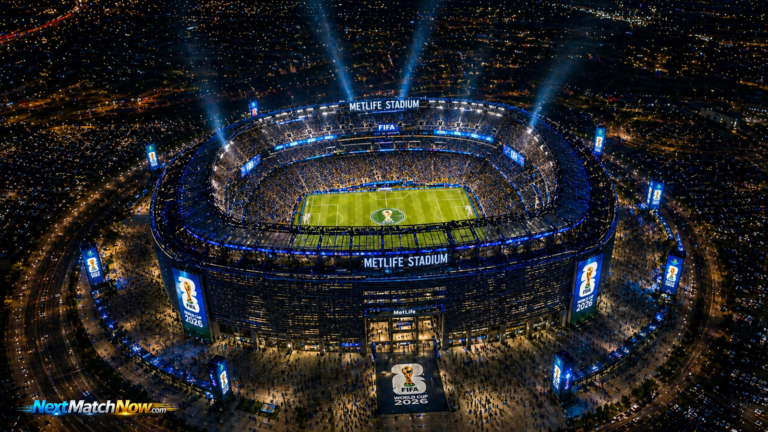
As the road to the FIFA World Cup 2026 heats up, this baseline passion has evolved into an absolute frenzy. The excitement currently sweeping across the continent is unlike anything witnessed in previous World Cup cycles. With the highly anticipated tournament set to be co-hosted by the United States, Canada, and Mexico, African nations are preparing for what promises to be the most historic global showdown in sports history.
But why exactly is the “craziness” and anticipation in Africa so intense this time around? Here is a comprehensive deep dive into the factors fueling the African football revolution ahead of 2026.
The Historic Game-Changer: 9 Guaranteed Spots
For decades, African football fans, managers, and sports pundits have argued a single, frustrating point: the continent was vastly underrepresented on the global stage. Historically, the Confederation of African Football (CAF) was allocated a meager five slots for the World Cup. This created a brutal, unforgiving qualification bracket where incredibly talented squads—often packed with UEFA Champions League winners—were left sitting at home because of a single bad match.
The 2026 World Cup changes the mathematical landscape entirely. Because FIFA made the landmark decision to expand the tournament from 32 to 48 teams, Africa has been awarded 9 direct qualification spots, alongside an opportunity to secure a historic 10th spot via an intercontinental playoff tournament.
This monumental shift in FIFA’s allocation has completely transformed the atmosphere across the continent:
- Renewed Hope for Developing Nations: Countries that have historically struggled to break past the final, grueling qualifying rounds now have a realistic, mathematical path to the world’s biggest stage.
- Massive Economic Investments: Knowing the dream of World Cup qualification is closer than ever, football federations and local governments across Africa are pouring unprecedented funds into grassroots development, elite coaching staff, and modern stadium infrastructure.
- High-Stakes Qualifiers: The newly formatted CAF qualification matches have become must-watch television. With nine groups of six teams battling it out, the intensity of every single fixture has skyrocketed.
The Morocco Effect: Shattering the Psychological Glass Ceiling
You cannot discuss Africa’s current football obsession without analyzing the seismic impact of the 2022 World Cup in Qatar. The Moroccan national team, famously known as the Atlas Lions, achieved the impossible by becoming the first African and Arab nation in history to reach the World Cup Semi-Finals.
Morocco did not just get lucky; they played brilliant, tactical football. They defeated European heavyweights like Belgium, Spain, and Portugal, proving once and for all that African teams are not just traveling to the World Cup to make up the numbers—they possess the tactical discipline and raw talent to win the entire trophy.
Morocco’s historic run shattered a long-standing psychological glass ceiling. Today, traditional heavyweights like Senegal, Nigeria, Ivory Coast, Egypt, and Ghana are no longer hoping to merely survive the group stages. They are fueled by the genuine belief that an African nation can reach the final in North America and lift the trophy.
The Diaspora Advantage: North America as a “Home” Ground
When an African nation qualifies for a major tournament, the fans bring an atmosphere that no other continent can successfully replicate. The “crazy” anticipation for 2026 is heavily tied to where the tournament is being held.
The United States and Canada are home to a massive, highly passionate African diaspora. Because the 2026 tournament will be spread across massive NFL-sized stadiums in North America, African teams are expecting to play in front of roaring, friendly crowds.
- Vibrant Stadium Atmospheres: From the rhythmic, non-stop beating of traditional drums to synchronized dancing and breathtaking tifos, African fans turn stadiums into colorful carnivals.
- Built-in Fan Bases: Teams like Nigeria, Ghana, and Senegal can expect heavy home-crowd advantages in highly diverse host cities such as Atlanta, Houston, Toronto, and New York/New Jersey. For these national teams, traveling to North America will feel less like an away game and more like a homecoming.
A Golden Generation of Global Superstars
The sheer depth of the talent pool currently representing African football has never been more impressive. African stars are no longer just participating in Europe’s top leagues; they are dominating them. From the English Premier League and Spanish La Liga to Italy’s Serie A and the German Bundesliga, African athletes are the driving force behind some of the world’s most successful clubs.
Fans are desperate to see these modern icons carry their explosive club form onto the international stage. Players like Mohamed Salah (Egypt), Victor Osimhen (Nigeria), Achraf Hakimi (Morocco), and Mohammed Kudus (Ghana) are in the prime of their careers. Watching these world-class athletes don their national colors and battle for global supremacy is driving massive digital engagement, fierce social media debates, and record-breaking sports news consumption across the continent.
What to Expect Next on the Road to 2026
The road to North America 2026 is long, grueling, and entirely unpredictable. As the grueling CAF qualifiers continue to unfold across the continent, fans should expect stunning tactical upsets, dramatic late-minute goals, and the rise of completely new footballing heroes.
One thing is absolutely certain: when the FIFA World Cup 2026 finally kicks off, the African nations will arrive with deeper squads, bigger ambitions, and the loudest, most vibrant fans on the planet. The international football world better be ready, because Africa is coming to conquer, and the frenzy is only just beginning.
Stay updated with the latest news, exact kick-off times, and real-time fixture updates for the FIFA World Cup 2026 qualifiers right here on NextMatchNow.